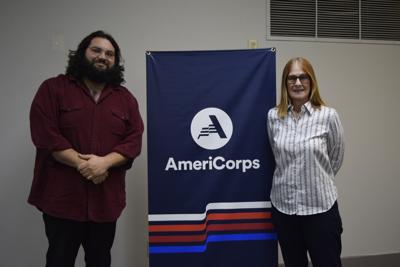
The Appalachian Regional Coalition for Homelessness has felt the effects of DOGE cuts settle into its operations.
One person has felt the effects directly hit his job. Connor McClelland was the previous AmeriCorps coordinator for the organization. Now, with the recent funding cuts to the program, his job has shifted to community engagement coordinator.
Uncertainty
Despite the change in title to his job, McClelland said the long-term potential of his employment with ARCH remained uncertain.
“I may not be here–August 15 is what I presume to be the end of my time, unless AmeriCorps funding comes through or something changes, but I don’t know exactly yet,” he said. “That’s what I’m doing for now until, on the case AmeriCorps comes back, then I’ll resume the responsibility of AmeriCorps program director.”
McClelland said the lasting effects of the DOGE cuts have impacted the organization in a handful of different ways. He said the aftermath of the funding loss took a toll on ARCH’s intake amount and placed pressure on the organization’s employees.
“We have definitely seen a decrease in our ability to regularly conduct intakes,” McClelland said. “All of our partner organizations have seen a decrease in their ability to schedule and perform intakes, and it’s just an overall increase on the burden to the homeless service providers. Whether it be that direct service component, whether it be the personnel to back things up–I’ve personally seen a decrease in our effectiveness and an overall increase on the strain of employees where there’s less support now.”
Between community outreach and general monetary funds, he said the repercussions of losing the AmeriCorps grant has ARCH digging into various methods to make up for the loss of funding. McClelland said some of these methods include applying for grants with the State of Tennessee, as well as grants that are smaller with private foundations or local government grants.
Goods for Good
He added a “vital” source of income, though, is being collected through ARCH’s thrift store, Goods for Good.
“We still try to do fundraising, and particularly in our case, our fundraising comes through our thrift store Goods for Good,” said McClelland. “I’ve definitely been, in my social media work, trying to encourage people to donate to Goods for Good–in particular, certain types of items that may be not as common in thrift stores, like used electronics or appliances, different types of equipment, computers, phones, stuff like that.”
McClelland explained the items being donated allow those in need to buy items at lower prices and give the store a chance to provide a greater source of revenue for the organization as more people shop.
[image]
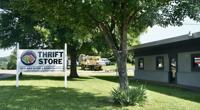
The ‘Goods for Good’ thrift store is located at 2401 South Roan St. in Johnson City.
GRACE TEATER/gteater@sixriversmedia.com
“That’s a big goal for us, it to try to get the thrift store to be a main way to bring in money,” he said. “It’s really nice too, because with the thrift store, we’re able to raise money for ARCH. It also allows people in the community to get rid of things they don’t need, it reduces waste, generally, and it also helps us serve our mission in a lot of ways because it provides a place for people to buy affordable goods…I’m very passionate about the potential of our thrift store to help us, but also help our community.”
McClelland added part of the reason ARCH is heavily feeling the effects of the cuts is due to the lack of “diversification” in how the organization obtained its funds.
“Unfortunately, really, we probably needed to diversify our funding and make plans for that earlier, and we’re just not there yet,” McClelland said. “We were relying on federal funds, and now we’re kinda in a hard spot because we didn’t diversify our income, and this is the challenge we’re facing now. We’re trying to correct that as quickly as we can, and as most effectively as we can.”
Though the circumstances remain uncertain, McClelland said ARCH has seen support from people and partners throughout the region, whether it be by social media and/or donations directly to ARCH and Goods for Good.
Ambiguous future
However, the next steps for ARCH and the AmeriCorps program coming back are uncertain, he said. Part of this uncertainty stems from potential funding given by the State of Tennessee, which McClelland said would give ARCH the ability to bring back the AmeriCorps program one year at a time.
“The state gets a certain amount of money allocated by AmeriCorps that they get to have discretion on how it’s spent,” McClelland said. “Volunteer Tennessee has let us know that there’s a good chance that we can utilize the set aside funds they have to operate our program for a one-year term–it’s called formula funding. At the end of the day, that is also in process, so we don’t know if that will be funded, we don’t know when that will be funded. There’s a lot of moving parts there, but they seem fairly confident that (it’s) a good possibility we’ll get that funding.”
This tentative funding, though, is also reliant on more clarity in the discretionary budget, McClelland said, leaving a feeling of ambiguity for the future.
“The appropriations process for 2026 is going to be a really big determining factor to what extent changes in government are going to affect ARCH as a whole,” he said. “Whether it be AmeriCorps, HUD, whatever–we’re just kind of waiting for that. We just don’t have a lot of clarity, and things are still up in the air.”